
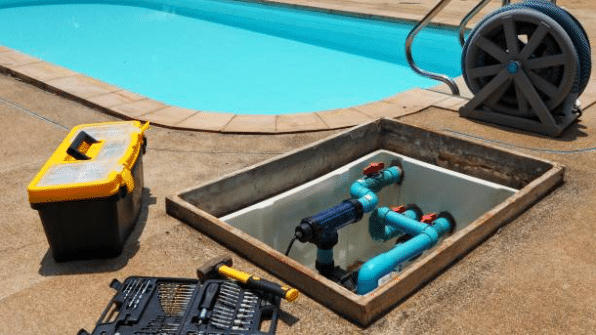
A pool can look perfectly normal while its circulation system is beginning to struggle. Weak return flow, air bubbles, changing pressure readings, unusual pump noise, or inconsistent operation can all signal that water is no longer moving through the system as efficiently as it should.
Four Seasons Pool Care includes pumps, filters, pressure readings, timers, and water flow in its regular pool equipment inspections and weekly pool service. Recognizing early circulation problems can help homeowners address small issues before they begin affecting filtration, water clarity, or the overall condition of the pool.
Weak Water Flow From Pool Return Jets
One of the easiest circulation problems for a homeowner to notice is weaker-than-normal water flow from the pool returns. The change may happen gradually, which makes it easy to overlook until debris begins collecting in low-flow areas or the water becomes more difficult to keep clear.
Reduced flow does not point to one specific cause. Baskets, filters, valves, pump operation, plumbing conditions, and other parts of the circulation system can all influence how efficiently water moves through the pool.
- Return jets feel noticeably weaker than usual
- Some areas of the pool have much less movement than others
- Surface debris is no longer moving efficiently toward the skimmer
- Water circulation appears weaker even though the pump is running
- Low-flow areas begin collecting debris or developing algae more easily
A circulation inspection can help determine whether restricted flow is coming from routine maintenance needs or another equipment condition.
Air Bubbles or a Pool Pump That Loses Prime
A properly operating circulation system should move a steady supply of water through the pump. Persistent air entering the system can interfere with that process and may show up as bubbles returning to the pool, visible air inside the pump basket, or difficulty maintaining prime.
An occasional bubble is not necessarily a problem, but recurring air or inconsistent pump operation deserves attention because the system depends on steady water movement.
- Large or persistent bubbles appear from return jets
- Air is visible inside the pump basket while the system is operating
- The pump repeatedly struggles to maintain a full flow of water
- Circulation becomes inconsistent after the pump starts
- Water movement improves temporarily and then weakens again
Recurring air in the circulation system is worth evaluating rather than simply restarting the pump and hoping the problem disappears.
Unusual Pool Pump Noise
Pool equipment naturally makes some operating noise, but homeowners usually become familiar with what their system sounds like. A new grinding, rattling, humming, squealing, or unusually loud sound is a reason to take a closer look.
Noise alone cannot identify the exact problem, but a noticeable change in sound can be an early warning that the pump or surrounding equipment is operating differently than normal.
- Grinding or rattling that was not present before
- A high-pitched or unusual humming sound
- Pump noise becoming noticeably louder over time
- Intermittent sounds that occur when circulation changes
- Noise appearing at the same time as weak flow or inconsistent operation
A change in equipment noise is especially important when it appears alongside other circulation symptoms.
Pressure Readings Can Reveal Circulation Changes
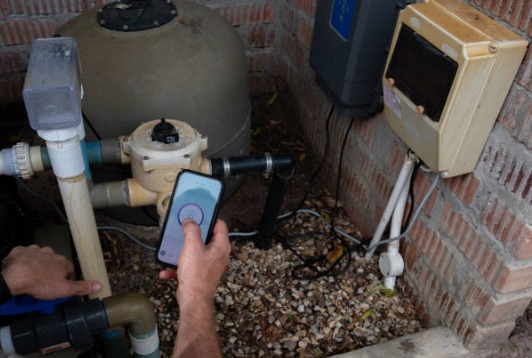
Filter pressure provides useful information about how water is moving through the circulation system. A reading that changes significantly from the pool’s normal operating range can indicate that water is encountering more or less resistance than usual.
Pressure should be interpreted together with filter condition, basket cleanliness, water flow, valve positions, and the overall behavior of the system rather than treated as a diagnosis by itself.
- Filter pressure rises noticeably above the system’s normal reading
- Pressure remains unusually low while return flow is weak
- The reading changes suddenly without an obvious reason
- Pressure returns to normal after routine cleaning but quickly climbs again
- Changes in pressure occur alongside poor circulation or cloudy water
Regular pressure monitoring makes it easier to notice when the circulation system begins behaving differently from its normal baseline.
Timers and Pump Schedules Matter Too
Sometimes the circulation system itself is capable of moving water properly, but the operating schedule no longer matches the pool’s needs. Timers, variable-speed settings, seasonal changes, debris loads, water temperature, and swimmer activity can all affect how much circulation is appropriate.
Four Seasons Pool Care’s recent fall pool maintenance guide for St. Johns explains why reducing pump operation too aggressively can create stagnant areas and make filtration less effective.
- Confirm the pump is starting and stopping when expected
- Check whether programmed schedules have changed unexpectedly
- Avoid assuming the shortest possible run time is always the most efficient
- Consider changing debris loads, weather, and pool usage
- Make gradual seasonal adjustments instead of large schedule reductions
Efficient circulation depends on both properly operating equipment and a schedule that matches the individual pool.
Poor Circulation Can Become a Water Quality Problem
Circulation, filtration, and water chemistry work together. When water is not moving effectively, sanitizer and filtration may not perform evenly throughout the pool, allowing fine debris, contaminants, or algae to become more difficult to control.
If water has already become hazy or difficult to maintain, Four Seasons Pool Care’s guide to common causes of cloudy pool water in Northeast Florida explains how circulation problems can interact with filtration, sanitizer effectiveness, rainfall, and water balance.
- Debris may remain suspended or settle in low-flow areas
- Sanitizer may not circulate evenly throughout the pool
- Filtration becomes less effective when water movement is restricted
- Low-circulation areas can become more vulnerable to algae growth
- Recurring cloudy water may involve circulation as well as chemistry
Correcting water chemistry without addressing an underlying circulation issue can leave homeowners treating the symptom instead of the cause.

Schedule a Pool Equipment Inspection in St. Johns
If your pool has weak return flow, persistent air bubbles, unusual pump noise, changing pressure readings, or inconsistent circulation, Four Seasons Pool Care can inspect the system as part of its professional pool service.
Four Seasons Pool Care serves pool owners throughout St. Johns, Jacksonville, Fruit Cove, Julington Creek, Ponte Vedra, Nocatee, and St. Augustine. Request a consultation to have your pool’s circulation, equipment condition, and regular maintenance needs evaluated.
Areas We Serve
- St. Johns
- Jacksonville
- Fruit Cove
- Julington Creek
- Ponte Vedra
- Nocatee
- St. Augustine
If you are unsure whether your location falls within our service area, feel free to reach out and ask.